

Making room for an urgent order
An urgent order can look easy to fit in, but the real constraint may be a production stage that is already fully booked. This guide covers how to make room for it without putting agreed delivery dates at risk.
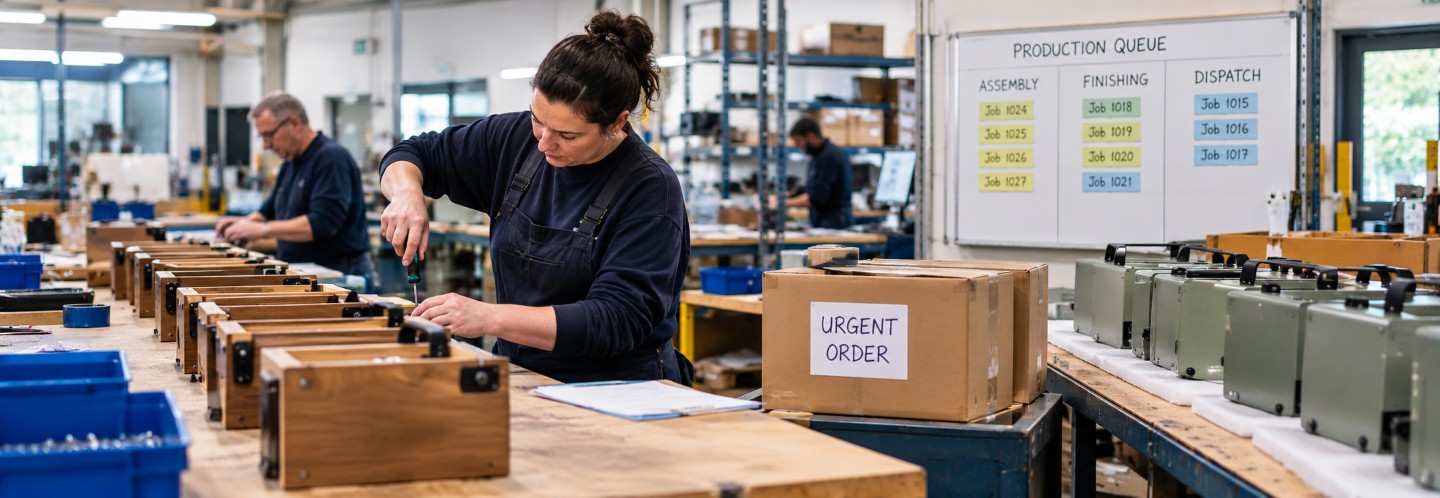
Taking on an urgent order can delay work you've already promised to other customers. It's easy to focus on the new customer's deadline and say yes before checking what that does to the delivery dates already agreed.
Take a workshop where finishing is full for the week. A new job comes in that's quick to assemble, so it looks easy enough to fit in. But it needs finishing too. Putting it at the front of that queue pushes back work that's already been made and is waiting for its turn. The job may only take a few hours in total, but it still needs time at a stage that's already fully booked.
The team can rearrange the queue, but they also need to know which customers can accept a later delivery. One may have some room in their schedule. Another may have booked an installation team for the following morning. Even a day's delay could mean that they have to rearrange the installation.
Agreeing to a rush order and leaving the team to fit it in can leave them with a decision they aren't in a position to make. They can work out how to move the jobs, but agreeing a delay with a customer may be outside their role. By then, the urgent customer has already been given a date.
A rush charge can pay for overtime or an extra delivery. If overtime is available in finishing, it may solve the problem. If it isn't, the extra charge won't prevent other orders being delayed. Whether those customers can accept a delay still affects whether the urgent order can be taken on.
The customer's deadline may also apply to only part of the order. They may ask for the whole order by Friday because that's when they start the work, even though they'll use it over several days. Delivering part of it on Friday and the rest later could be enough to keep them going. That could avoid rearranging several other orders to deliver everything at once.
Being able to help at short notice can be a good reason for a customer to keep coming back. And when there's a gap in the schedule, or another job is waiting for materials, fitting it in may be straightforward.
Keeping some production time available for urgent orders is one option when they arrive regularly. That can mean turning away other work, and the time may go unused if no urgent orders arrive. Booking the workshop fully avoids deliberately leaving gaps, but means a rush order will need extra working hours or a change to the schedule.
Related Blogs


Ready to get control of stock, orders and fulfilment?
Get started today and see the difference Workhorse can make for your business.